Life Cycle Assessment for Product Teams
Regulations now require LCA data; product teams must own the process, not just compliance.
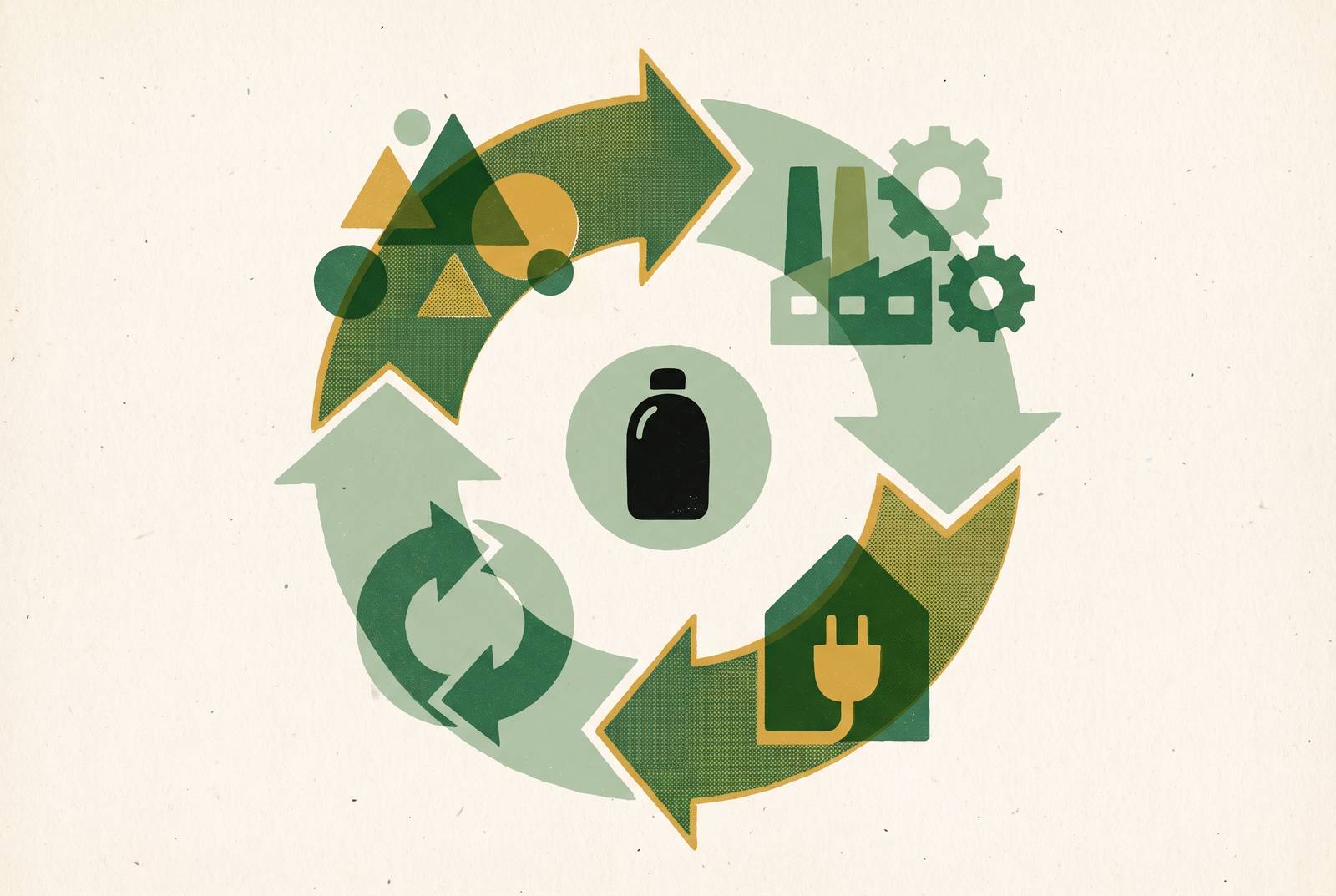
Life Cycle Assessment used to sit inside a sustainability team's back office, run occasionally, filed away, cited in a report nobody outside compliance read closely. That practice is over. LCA has become a cross-functional workflow that product engineers, procurement leads, and operations teams need to run together. The reasons for that shift are external: the requirement now sits in ESG reporting, export documentation, procurement qualification, and eco-design strategy, all at once.
What's pushing this isn't one regulation, but several converging at similar moments. Buyers demand product-level environmental data before they'll qualify a supplier. Export markets increasingly require it as documentation. And greenwashing enforcement has sharpened enough that generic claims no longer survive scrutiny; LCA-backed data has become the only credible basis for an environmental claim, since a database average can no longer stand in for what a specific product actually does. From 27 September 2026, the Empowering Consumers Directive (EU) 2024/825 makes an unsubstantiated environmental claim an unfair commercial practice outright, and a database average will not satisfy that bar kbscertification.com fiegenbaum.solutions.
That creates a genuine ownership problem. Most LCA software was built for trained analysts who understand characterization methods and allocation rules. But the people who actually need the outputs, engineers selecting materials, procurement leads vetting suppliers, operations managers reducing process waste, are not LCA specialists. This article works through how LCA works in practice: what each stage involves, who owns what, and how the outputs feed real product decisions.
What LCA measures, including impacts beyond carbon
LCA is a scientific method for evaluating the environmental impact of a product, process, or service across its full life span: raw material extraction, manufacturing, transport, use, and end of life. Carbon gets the headlines, but it's only one slice of what a properly run assessment covers. A full study touches global warming potential alongside eutrophication, acidification, resource depletion, and water impact, giving a fuller account of what a product actually costs the environment rather than a single, easily-quoted number.
Three output types come up constantly, and product teams should know the difference before a vendor or a client throws the acronyms at them. A Product Carbon Footprint (PCF) is built on ISO 14040/44 and focuses narrowly on carbon emissions. A Product Environmental Footprint (PEF) covers similar ground but widens the lens to a broader set of environmental criteria, typically the EF 3.1 category set. An Environmental Product Declaration (EPD) is a different animal entirely: a Type III eco-label under ISO 14025, which demands a verified cradle-to-grave study run against the relevant Product Category Rules. That verification requirement is what separates an EPD from a marketing claim.
Scope matters just as much as output type, because it defines what a team is actually committing to measure. Cradle-to-grave covers the full arc, raw material through disposal. Cradle-to-gate stops at the factory door and is common for component-level footprints. Gate-to-gate narrows further, to a single process step. None of these is more "correct" than another; they answer different questions, and confusing them is how comparisons go wrong.
Two more distinctions save a lot of confusion downstream. LCA is the full analytical process, while Life Cycle Impact Assessment (LCIA) is specifically the phase where raw inventory numbers get translated into impact categories, so the terms aren't interchangeable even though people use them that way in casual conversation. Attributional versus consequential framing serves different ends: attributional captures average impact as it exists today, useful for baselines and EPDs, while consequential models the change caused by a decision such as switching a material or supplier, which is relevant when teams are evaluating design options.
What each ISO phase demands from the team
Two standards anchor everything here. ISO 14040 lays out the framework and guiding principles, the what and the why of an assessment. ISO 14044 gets specific about requirements and guidance for each phase, the how. Together they define a four-phase process that any compliant LCA has to follow, no shortcuts. The methodology has held steady but hasn't stood entirely still. ISO 14044, together with ISO 14040:2006, replaced four earlier standards in 2006, and amendments followed in 2017 and 2020. Stable, in other words, but not frozen.
Phase one is goal and scope definition. This is where a team decides what's being assessed, why, and for whom the results matter. Central to this phase is the functional unit, a fixed reference like "1,000 units of packaging" or "one square meter of flooring" that anchors every comparison that follows. Get the functional unit wrong and every downstream number ends up comparing apples to something else. This phase typically sits with a sustainability lead, but it needs input from product engineering, because engineers understand what the product actually is and how customers use it in a way a sustainability specialist working from a spec sheet usually doesn't.
Phase two is the Life Cycle Inventory, or LCI. This is the data collection phase: material inputs, energy use, emissions, transport movements, waste flows, all of it recorded. Data here is a blend of primary information, company-specific figures like bills of materials, utility bills, transport logs, and production loss rates, and secondary data pulled from reference databases such as Ecoinvent or GaBi. Operations and procurement hold most of this information, which makes them the primary contributors here, not the sustainability team. It's also the most resource-intensive phase and the primary bottleneck, because existing company data infrastructures frequently restrict the availability and granularity of energy and process data kbscertification.com.
Phase three, Life Cycle Impact Assessment, converts that raw inventory into actual impact categories. Analysts use characterization methods like ReCiPe, which covers both midpoint and endpoint impact categories, CML, widely used in Europe, or TRACI, often applied in North America, or EF 3.1 for EU-aligned work. This is usually where a trained analyst or sustainability specialist has to take the wheel; non-specialists need software support to run this reliably rather than attempting it by hand.
Phase four is interpretation: reviewing findings, spotting hotspots, running sensitivity checks, comparing against a baseline. ISO 14044 requires a critical review before any comparative claim gets published, and that reviewer has to be able to follow the model without needing to own the software license themselves. Interpretation is genuinely cross-functional. The sustainability lead reads the findings, but engineers and procurement are the ones who act on them.
The eco-design paradox: why running LCA too late defeats the purpose
The awkward math at the center of eco-design is this. Up to 80% of a product's environmental impact gets locked in at the concept stage, according to McAloone and Bey's research, and that's exactly the moment when the least product data exists to run a meaningful assessment McKinsey & Company McKinsey & Company. Call it the eco-design paradox: the point where change is cheapest and most consequential is also the point where a standard LCA tool has almost nothing to work with, because detailed specifications simply don't exist yet.
The practical fallout is predictable. Most teams run their LCA after the design is essentially locked, materials chosen, suppliers signed, tooling ordered. At that stage, the assessment measures what already happened rather than shaping what happens next. It's a rearview mirror exercise dressed up as forward planning.
There's a workaround, and it's more practical than clever. Teams can build models using generalized material categories, "metal" or "plastic" rather than a specific alloy grade, and pair that with techniques like Monte Carlo analysis to run hundreds of scenarios under uncertainty. This underspecification can reveal real areas of concern in the results well before full specification data exists.
The structural implication follows directly: LCA has to enter product development at the concept stage, not after the materials and suppliers are locked in. That means engineers need enough LCA literacy on their own to flag a high-impact decision before the sustainability team is even in the room. Boston Scientific's roadmap illustrates what that institutional commitment looks like in practice: 2025 to define and pilot the process, 2026 to roll it out and train teams, 2027 to embed it fully into product development under Design for Sustainability principles kbscertification.com fiegenbaum.solutions. That's a multi-year build, unlike a software rollout over a quarter.
Hotspot analysis: the output that connects LCA findings to product decisions
Hotspot analysis is the part of an LCA that actually tells a team where to spend its effort. It identifies which life cycle stages, processes, or inputs carry the largest share of environmental impact. If raw material extraction turns out to be the dominant stage, that's the signal to look at alternative materials or reduced material use, rather than chasing marginal gains somewhere less consequential.
The real value of hotspot analysis is what it prevents: burden shifting, solving a problem in one stage while quietly creating a bigger one somewhere else. Lightweighting a product to cut transport emissions sounds like an unambiguous win, until the lighter material turns out to be harder to recycle or far more energy-intensive to produce. LCA reveals that trade-off before the design gets locked in, which is precisely when it's still cheap to change course.
Hotspot outputs land differently depending on who's reading them. Engineers use them for material substitution and design-for-disassembly decisions. Procurement uses them to judge whether swapping a supplier genuinely reduces impact, rather than just moving the number around on paper. Operations uses them to find real inefficiencies in manufacturing and logistics rather than treating the exercise as a measurement chore. The same hotspot dataset also feeds board reporting, brand communications, and tender responses. One study, run properly, serves several audiences at once, provided the underlying data is structured so it can be reused rather than rebuilt from scratch each time.
Fixing breakdowns in data collection
Ask anyone who has actually run an LCA where it falls apart; the answer is almost always the same: the Life Cycle Inventory kbscertification.com. Collecting high-quality primary data on energy use, material flows, and process-specific inputs is consistently the most resource-intensive and failure-prone stage of the entire exercise kbscertification.com. Everything downstream depends on it, and yet it's the phase companies are worst equipped to handle.
Three structural problems recur across product teams, regardless of sector. Internal data gaps come first: ERP systems, bills of materials, and utility metering rarely capture the granularity an LCA actually needs, energy per process step, waste rates by production run, packaging loss on a specific line. Scope 3 complexity is second: supplier-side emissions under Scope 3, Category 1 sit outside a company's direct control, so teams default to database averages, which weakens accuracy and increasingly fails to satisfy either regulators or large buyers. Use-phase data is the third gap, and often the softest part of any cradle-to-grave study: Scope 3, Category 11 requires assumptions about how customers actually use a product, and those assumptions are frequently the weakest link in the whole chain.
AI-assisted tools promise efficiency gains across all four ISO phases, and there's real substance to that promise https://www.fiegenbaum.solutions/en/blog/mastering-life-cycle-assessment-steps-software-and-impact-analysis. But the sources are consistent on one point: automated outputs still need expert validation, particularly for anything headed toward third-party critical review or regulatory disclosure, and adoption of these tools outside specific vendor ecosystems remains limited. Treat AI as an accelerant for a human-reviewed process.
Practically, three habits help. Collect once and reuse widely: the bills of materials, energy figures, transport records, and supplier responses gathered for one product study can support Scope 3 calculations, CSRD reporting, and DPP requirements simultaneously, which removes the need to rebuild the same dataset for every new obligation. Build supplier engagement as an ongoing workflow rather than a single sprint, gathering primary data progressively instead of trying to complete an entire LCI in one push. And where primary data genuinely isn't available, use a recognized database like Ecoinvent or GaBi and document that assumption explicitly, so a reviewer can follow the logic rather than take the number on faith. Product teams face three structural data problems in data collection.
The regulatory mandates that make LCA data a product-level requirement, not a report
The regulatory calendar over the next few years turns LCA from a nice-to-have report into an ongoing operational requirement, tied to specific products rather than annual disclosures. The EU Digital Product Passport is the clearest example: mandatory for industrial, EV, and LMT batteries over 2 kWh starting 18 February 2027 under Regulation (EU) 2023/1542, with textiles and electronics following under the broader ESPR working plan. The LCA is the analysis, while the DPP is the auditable, machine-readable record of that analysis, permanently attached to one physical product. That passport data then feeds directly into corporate Scope 3 reporting, with Category 1 and Category 11 both drawing on product-level LCA figures rather than the industry-average emission factors companies have leaned on for years.
The Ecodesign for Sustainable Products Regulation, in force since 18 July 2024, extends the same logic sector by sector kbscertification.com fiegenbaum.solutions. Smartphones and tablets are already covered, though under the older Ecodesign Directive rather than ESPR itself, while textiles, iron and steel, furniture, and tyres face phased deadlines starting in 2026, with most mandatory requirements landing between 2027 and 2030 kbscertification.com fiegenbaum.solutions. The Green Claims framework tightens the same screw from a different angle: product-level carbon footprint data calculated under ISO 14040/44 is fast becoming a prerequisite for any credible green claim, and a generic database average won't cut it for a claim about one specific product.
Construction has its own track. The revised Construction Products Regulation, (EU) 2024/3110, has its general articles in force from 7 January 2025, with most provisions applying from 8 January 2026 and penalty provisions following on 8 January 2027, introducing mandatory environmental performance declarations for construction products fiegenbaum.solutions. And as already noted, the Empowering Consumers Directive closes the loop on unsubstantiated claims from 27 September 2026 kbscertification.com fiegenbaum.solutions.
Taken together, these deadlines describe a shift in what "compliance" even means here. The task is no longer just to conduct an LCA study periodically; it's to keep lifecycle data usable at the product level, continuously, aligned with a stack of EU requirements that don't expire after one report cycle. For manufacturers exporting into the EU, CBAM adds a related but distinct obligation: embedded emissions per tonne of imported goods, a different calculation from a full LCA, but one built on the same primary data infrastructure a company needs for everything else on this list.
Five LCA software tools and their best-suited applications
No single "best" LCA tool exists, and treating the choice as a ranking misses the point entirely. What matters is what a team has to hand over at the end, an EPD registered with a programme operator, a DPP entry, a CSRD/ESRS E1 figure, or simply a defensible product claim, since each of those demands a different level of data granularity and, often, an entirely different category of software.
Four questions narrow the field faster than any feature comparison. What output is actually required, and has the vendor delivered that specific output in a comparable sector before? Can someone outside the sustainability team run a study, or does every model have to queue behind one trained analyst? Does the tool read directly from existing product data, bills of materials, ERP records, utility meters, or does someone have to retype all of it by hand? And can an outside reviewer follow the model's logic without needing to buy a license just to check the work?
Among the tools covered in a comparison, Dcycle stands out as an environmental data platform built around native product-level LCA connected directly to operational sources: bills of materials, utility consumption, transport records, supplier responses, and corporate emissions inventories, all held in one repository rather than scattered across spreadsheets. That connection to existing operational data is exactly the kind of practical detail the four questions above are meant to surface, since a tool that has to be fed by hand quietly reintroduces the same bottleneck LCA is supposed to solve. Whichever platform a team lands on, the sorting logic stays the same: work backward from the output that's actually owed, to the regulator, the buyer, or the customer, and let that decide the tool, not the other way around.